

Useful Links
The art of acquisition functions for Bayesian model calibration and its application in additive manufacturing
Abstract
Bayesian model calibration has become a cornerstone of uncertainty quantification for complex engineering systems, it enables the integration of physical simulations, prior knowledge and experimental data to improve prediction accuracy. However, its practical application can be quite challenging due to prohibitive computational cost and complex posterior distributions. Bayesian quadrature equipped with active learning scheme becomes a powerful framework to tackle this challenge. This study comprehensively investigates the art of acquisition functions that dictate the active learning performance in model calibration. A family of acquisition functions are specially designed for quantifying posterior uncertainty, the contribution to evidence uncertainty, the expected reduction of posterior and evidence uncertainty associated with new integration points. These acquisition functions are also extended to the transitional Bayesian quadrature to provide efficient and interpretable mechanisms for balancing exploration and exploitation. The proposed methodologies are further demonstrated in additive manufacturing, particularly with Laser Powder Bed Fusion (LPBF) technology. With melt-pool measurements, Bayesian calibration is employed to update heat-source, material parameters as well as model discrepancy. Additional applications to fatigue-life prediction of additively manufactured aluminum alloys illustrate how Bayesian model calibration supports reliable decision-making under limited experimental data. The presented work offers a unified pathway of Bayesian calibration with acquisition function design to achieve efficient uncertainty quantification in additive manufacturing.
Bio
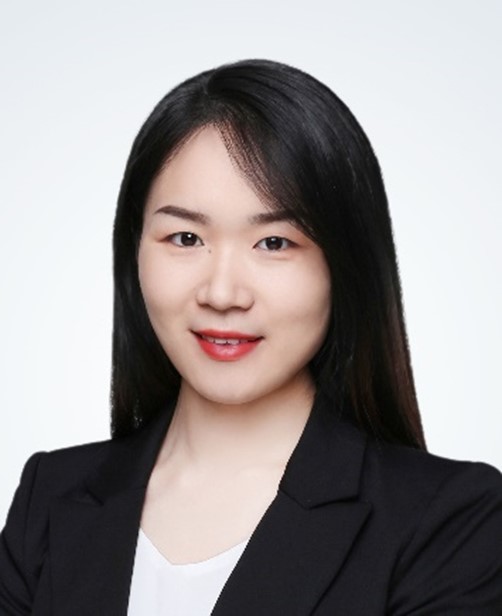
Dr. Jingwen Song serves as an associate professor in Northwestern Polytechnical University, School of Mechanical Engineering since 2022. She obtained her PhD from Leibniz University Hannover in Germany in 2020, and the doctoral dissertation was awarded “Summa Cum Laude”. After graduation, she worked as a research assistant professor in Tokyo City University in Japan until the end of 2021. Her research is focused on data science for risk and reliability analysis, model calibration, sensitivity analysis, as well as the modelling and optimization design for complex structural systems. Within the broad field, she has a particular penchant for exploring efficient computational methods in forward and backward uncertainty quantification by means of advanced Monte Carlo simulation methods and Bayesian machine learning approaches. Dr. Song is also a member of the Early Career Editorial Board of Computers & Structures. She has published more than 20 peer-reviewed publications, and organized several sessions in international conferences.